
Screwdom 3D
iKame Games - Zego StudioPuzzle
4.64.42K Reviews
- Version
- 13.1.7
- Installs
- 10.00M
- Age Rating
- Everyone
Screenshots
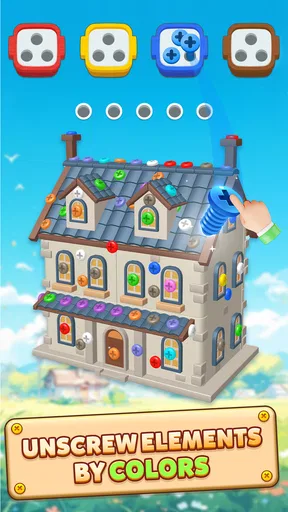
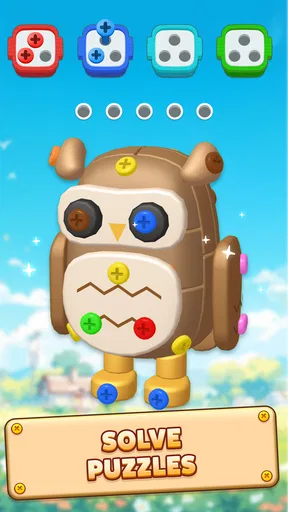
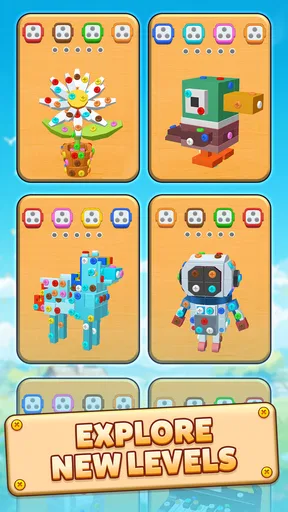
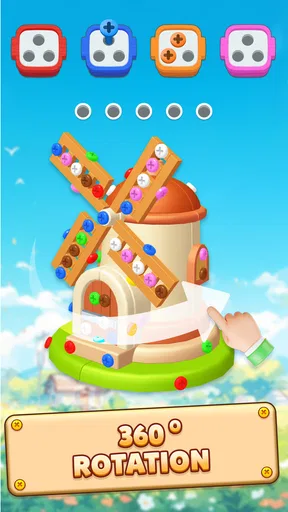
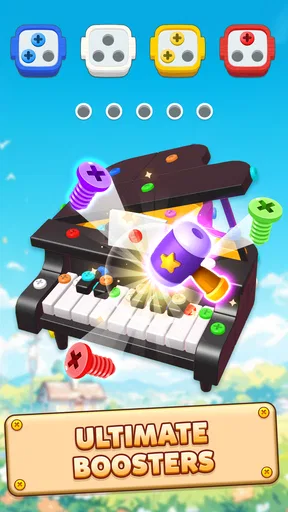
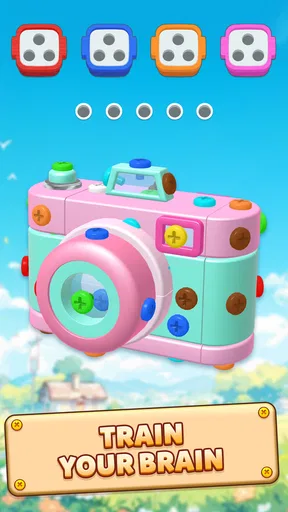
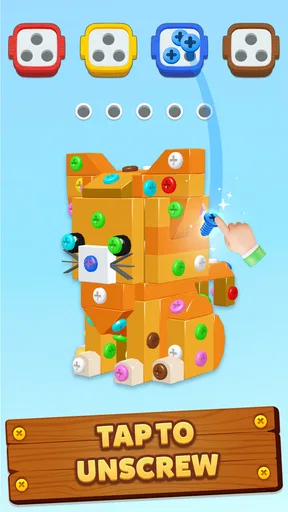
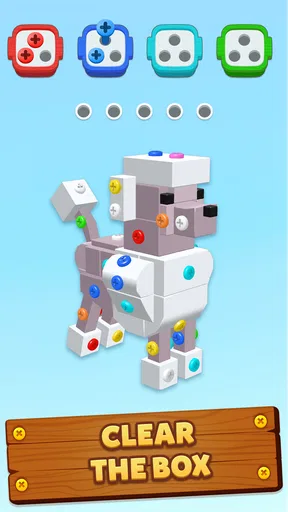
Our Review of Screwdom 3D
 Analysis by Appyee
I can see Screwdom 3D fitting naturally into a shared-device routine: one person can work through a puzzle, hand the phone over, and let someone else take the next turn. That makes it an easy game to pick up during a quiet moment at home, though it works best when everyone is happy to share one screen rather than expecting separate profiles or coordinated progress.
Passing the phone around without losing the thread
The physical idea behind the puzzles makes them easy to explain to a new player. Instead of teaching a long set of rules, I can simply point to the bolts and let someone try moving them. On a shared phone, I’d treat each level as a short joint challenge: one person studies the arrangement, another suggests which bolt to try, and the person holding the device makes the move.
That approach also helps avoid a familiar household snag: two people reaching for the screen at once. Taking turns by level keeps the puzzle readable and gives each player room to inspect the object before acting. If someone is still thinking, I’d resist tapping on their behalf; the satisfaction comes from seeing a plan work, not just watching the pieces move.
For a quick everyday example, it could fill a few minutes while waiting for dinner or during a calm break between chores. I’d keep the session informal rather than making it a competition. A puzzle that feels relaxing to one person may feel like a test to another, particularly if the group starts rushing the player holding the phone.
Set expectations before it becomes the shared game
Before handing over a device, I’d make sure the person using it understands that this is a game about manipulating bolts in three dimensions, not a broad collection of unrelated puzzles. That distinction matters if a child or guest expects word games, a story, or a large range of puzzle formats. The core appeal is the physical arrangement and the order in which pieces are released.
I’d also agree on a simple household boundary: play when the phone is available, then return it when the shared time is over. That is more useful than assuming the game itself will manage turns or separate people’s activity. A parent who needs detailed controls over individual play should rely on the device’s own family and account settings rather than expecting this puzzle to provide them.
There is a practical difference between letting someone try a level and letting them make account or purchase decisions. The game is free to start, but it offers optional in-app purchases, with items ranging from under a dollar to just under a hundred dollars. I would keep purchase approval with the device owner, especially on a phone used by several people. That boundary is sensible even when the game is being shared casually.
How to make the puzzles easier to share
When several people are looking at one level, I find it helps to rotate the object deliberately before making a move. A bolt that looks simple from the front may sit in a less obvious relationship to the other pieces when viewed from another angle. Taking a moment to inspect the layout can turn a random tap into a reasoned choice, and it gives everyone something concrete to discuss.
I’d also let the person holding the phone make the final decision. Suggestions are useful, but too many people issuing instructions can make a tactile puzzle feel fussy. If a move does not work as expected, treat it as information about the arrangement rather than a reason to take the phone away. That small change in tone keeps the game cooperative and preserves the hands-on part that makes it distinct.
For a mixed-age group, I would start with the person who is least familiar with this style of puzzle and give them time to explore. The more experienced player can point out that the order of moves matters without solving the whole level. It is a better fit for gentle collaboration than for a strict race, because the visual problem invites discussion and the pace is easy to set locally.
Where it sits among puzzle games
Compared with familiar match-and-clear puzzles, this one asks me to examine a single three-dimensional arrangement rather than scan a board for combinations. It also feels different from a classic jigsaw, where the main task is fitting shapes together. Here, the decision is about which fastener to move and how that choice affects what can be released next. That makes it a useful change of pace for someone who is tired of matching colors but still wants a compact logic challenge.
It is not the option I would choose for a player seeking a deep story, a long narrative campaign, or a puzzle game built around varied rule sets. Its appeal comes from repeating a recognizable physical action while the layouts grow more involved. If that central interaction stops being satisfying, a game with broader puzzle mechanics is likely to hold attention better.
One small but useful habit is to pause before each move and ask what it will free, rather than tapping through the most visible bolts. That encourages planning without turning a casual session into homework. I would use hints or other assistance only when a level has stopped being enjoyable; working through every puzzle at maximum speed misses the calm, tactile quality that makes this particular format appealing.
Age, trust, and a realistic household fit
The game is rated for Everyone, which makes it approachable as a general household puzzle, but an age label is not a substitute for an adult’s judgment about a particular child or device. I’d show younger players how to handle the phone carefully and explain the purchase boundary before they begin. The main challenge is visual reasoning and controlled tapping, so a child who enjoys inspecting objects may find it more engaging than someone who wants a fast-moving action game.
For adults sharing a device with children, I would check the device’s purchase and account settings before handing it over. The game’s optional purchases are a reason to keep those choices with the account owner, not a reason to assume every session will involve spending. A free-to-start puzzle can still have a paid layer, so the clearest household rule is that purchases require the owner’s permission.
It also helps to distinguish shared play from shared ownership. If several people use the same phone, they may take turns interacting with the same game on that device, but that does not automatically make their progress or preferences separate. Anyone who needs personal boundaries around a child’s screen time, spending, or account use should set those at the device or household level.
Who will enjoy it, and who may want another kind of game
I’d recommend it to people who like quiet, tactile puzzles and want something that can be picked up without a long session. It is particularly suitable for a shared phone because a level gives other people an obvious way to join in by suggesting a move. It can also suit a solo player who wants to focus on one spatial problem at a time instead of juggling a busy screen.
I would steer away from it if you need a competitive multiplayer experience, a strong narrative, or extensive variety from level to level. It is also not ideal for someone who dislikes repeated gestures or wants every puzzle to introduce a radically different mechanic. The game’s familiar unscrewing action is its identity and its main constraint: players who enjoy that interaction may find it soothing, while those who tire of it may prefer a broader puzzle collection.
Another consideration is how you respond to gradual difficulty. Some players enjoy an approachable opening that lets them learn the interaction, while others want demanding logic from the first minutes. If you fall into the second group, give the progression a little time before deciding whether the challenge is substantial enough for you. If the early pace already feels too gentle, there is no need to force it into a regular routine.
What the puzzle feels like in practice
Hey there, fellow app enthusiast! Today, I’m diving into a quirky and entertaining app called Screwdom 3D. If you’re into games that have a mix of puzzles and a bit of a tactile feel, you might want to stick around for this one.
So, let’s get straight to the point: this is one of those games that hooks you with its simple yet addictive gameplay. At its core, it’s all about solving puzzles by unscrewing bolts in a 3D environment. Sounds simple, right? Well, that’s just the tip of the iceberg.
Made by iKame Games - Zego Studio, it sits squarely in the puzzle game space. It is free to download, rated for Everyone, and has an average rating of 4.6 from around 296,000 ratings. More than 10 million installs suggest it has found a large audience for this straightforward idea. The game first appeared on December 18, 2024, and version 10.0.19 is the current release. It runs on Android 7.0 or later, while optional in-app purchases range from $0.99 to $99.99 per item.
The game offers a series of increasingly complex levels where you need to unscrew different bolts to free various objects. The challenge ramps up as you progress, with each level introducing new mechanics and obstacles.
Gameplay and Mechanics
Here’s where things get interesting. The mechanics are intuitive. You use your fingers to rotate and unscrew bolts, making it feel like you’re actually interacting with the objects on your screen. The tactile feedback is satisfying, and the 3D graphics are smooth and well-rendered.
Each level is a puzzle in itself, requiring you to figure out the best sequence to unscrew the bolts. Some bolts are straightforward, while others are tricky and need you to think a few steps ahead. The game cleverly uses a combination of logic and dexterity, keeping you on your toes.
Graphics and Sound
Visually, the game is a treat. The 3D graphics are vibrant and detailed, making each level a pleasure to look at. The animations are fluid, and watching the bolts unscrew is oddly satisfying.
The sound design complements the visual experience perfectly. The subtle clicks and clunks as you manipulate the bolts add to the immersive feel. It’s one of those games where you might find yourself playing with the sound on just to enjoy the full experience.
Why You’ll Love It
If you’re someone who enjoys a good puzzle, it delivers in spades. The game’s progression system is rewarding, and there’s a real sense of accomplishment as you solve each level. It’s perfect for those moments when you want a break but still want to engage your brain.
The game also has a bit of a meditative quality. There’s something incredibly relaxing about the repetitive motion of unscrewing bolts and the gentle challenge each level presents. It’s a great way to unwind after a long day.
Room for Improvement?
While it’s a solid game, there are a few areas where it could improve. Some players might find the levels a bit too easy initially, though they do become more challenging as you progress. Additionally, it would be nice to see more variety in the level design to keep things fresh.
Another point to consider is the in-game ads. They can be a bit intrusive at times, breaking the flow of the game. However, this is a common issue with many free-to-play apps, and the ads can usually be removed with a small purchase.
Final Thoughts
All in all, it’s a delightful little game that offers a unique blend of puzzles and tactile interaction. It’s a perfect pick for anyone looking to relax while keeping their brain engaged. Whether you’re a puzzle aficionado or just looking for a fun distraction, give it a whirl. You might just find yourself pleasantly surprised!
So, what are you waiting for? Grab your phone, download it, and start unscrewing your way to puzzle-solving bliss. Happy gaming!
Verdict
Strengths of Screwdom 3D
- Intuitive and engaging puzzle mechanics.
- Vibrant and colorful 3D graphics.
- Regular updates with new levels.
- Offline mode available for uninterrupted play.
- User-friendly interface for easy navigation.
Limitations of Screwdom 3D
- Occasional in-app purchase prompts.
- Limited hints without purchase.
- Ads can be slightly intrusive.
- Some levels feel repetitive.
- Performance lags on older devices.
Other Releases by iKame Games - Zego Studio
View All
Bike Race: Racing Games
Racing4.5

Moto Rider, Bike Racing Game
Racing4.5

Car Race
Racing4.6

Monster Truck Stunt Racing
Racing3.3
Similar Picks in This Category
View All
Block Blast!
HungryStudio4.8

Braindom: Brain Games Test
Lahana Game Studio4.6

AMAZE!
CrazyLabs LTD4.6

Sudoku - Classic Sudoku Puzzle
Oakever Games4.7

Art Puzzle - Puzzle Games
Easybrain4.8

Amaze GO!
Oakever Games4.9
Frequently Asked Questions
What is Screwdom 3D and how does it work?
Screwdom 3D is an engaging puzzle game that challenges players to solve intricate 3D puzzles by rotating and manipulating screws to unlock various mechanisms. The game provides a set of levels with increasing difficulty, requiring players to think strategically and use spatial reasoning to progress. It's available for both Android and iOS devices.
Are there any in-app purchases in Screwdom 3D?
Yes, Screwdom 3D offers in-app purchases that allow players to buy hints or unlock additional levels and features. While the game is free to download, these optional purchases can enhance the gameplay experience by providing more challenging puzzles or helping players when they are stuck.
How many levels are available in Screwdom 3D?
Screwdom 3D features an extensive array of levels that progressively increase in complexity. The game regularly updates with new levels to keep the experience fresh and challenging. Players can expect a diverse range of puzzles that test their problem-solving skills and offer hours of gameplay.
Is Screwdom 3D suitable for all ages?
Screwdom 3D is designed to be family-friendly, making it suitable for players of all ages. The game’s intuitive controls and engaging puzzles can be enjoyed by children and adults alike, although younger players might require assistance on more challenging levels. It’s a great way to develop cognitive skills in a fun setting.
Does Screwdom 3D require an internet connection to play?
No, Screwdom 3D can be played offline, making it ideal for players on the go or in areas with limited internet connectivity. However, an internet connection is required for downloading updates and accessing certain in-app purchase features. This ensures a seamless gaming experience regardless of the player's location.
Play our best games!


